Originally published on Frost & Sullivan
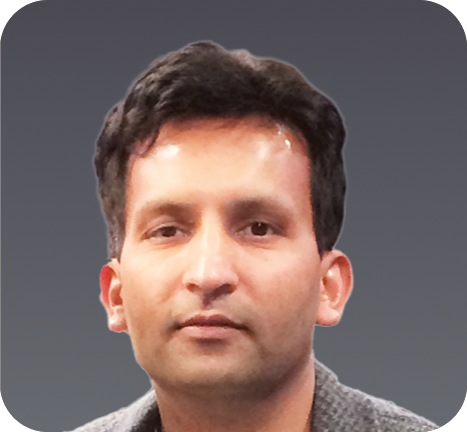
An interview with Deepak Garg, Founder, Chairman & Group-CEO, SEW.AI
The energy transition is pushing the grid to its limits. With the explosion of AI data centers and the rapid electrification of commercial fleets, utilities are facing unprecedented and unpredictable load demands. Building new transmission lines is no longer the sole answer; the future lies in grid-edge intelligence and harnessing the power of distributed grid assets.
Enter SEW.AI, ranked among the top 20 competitors in the energy AI space. Serving more than 470 utilities globally, SEW.AI’s Cosmos platform is built on over 3,000 utility-specific use cases. Its platforms have proven highly effective, delivering up to a 40% improvement in utility revenue and an 80% boost in workforce productivity. At the grid edge, SEW’s Vertical AI platform brings together Customer, Workforce, and Grid Intelligence into one connected ecosystem, enabling utilities and Commercial and Industrial (C&I) energy assets to move from fragmented operations to real-time, AI-driven coordination and value creation.
Guiding this expansion is Deepak Garg, a leader in customer and grid intelligence at SEW.AI, whose approach offers a masterclass in transformative growth leadership. Driving true growth in the energy sector requires four key principles:
- Focusing on real-world solutions over disruption: Building technology to solve immediate industry pain points rather than disrupting for the sake of it. .
- Developing adaptable, inclusive technology: Creating platforms that deliver value immediately, even within legacy infrastructure environments. .
- Prioritizing customer trust: Providing seamless, transparent, “Amazon-like” experiences that incentivize C&I participation in grid services. .
- Maintaining a long-term commitment: Approaching the market with an owner’s mindset and dedication to the industry’s future, not a quick exit.
Farah Saeed, Industry Director, Energy & Environment at Frost & Sullivan, sat down with Garg to discuss the transformational shifts shaping the sector, how Agentic AI is bridging the gap between legacy systems and modern energy demands, and what it takes to unlock the true potential of enterprise C&I energy storage.
We have to track and optimize every electron. With what I call a super-warrior mindset, our goal is simple: we are solving for this industry, not disrupting it
— Deepak Garg, Founder, Chairman & Group-CEO, SEW.AI
Transformative Megatrends: Balancing Grids in the Era of Exploding Energy Demand
Farah Saeed: What are the most transformative trends shaping the grid today, particularly for large-scale energy consumers?
Deepak Garg: The most critical trend is the surge in AI and EV demand, which is creating a complete imbalance on the grid. We have to look at affordability. Who is going to pay for this demand? We can’t just keep building out generation and transmission; we need to optimize. That means creating a connected fabric between the grid and the customer. The real focus has to be on electron management. Whether it’s a data center, a manufacturing plant, or a facility drawing power into onsite batteries, we have to track and optimize every electron coming into the grid at the customer level.
Growth Strategy: Enabling Innovation at the Grid Edge
Farah Saeed: C&I customers are increasingly investing in their own energy storage and edge intelligence. What is SEW.AI’s approach to fostering innovation and integrating these technologies?
Deepak Garg: Our process for innovation is rooted in solving complex, real-world use cases. AI is demanding more power, so our focus is on optimizing the endpoints. A key part of our approach is that we built every piece of software ourselves. While we have done some small, strategic M&As to fill specific gaps, 85% to 90% of all core capabilities are built in-house by our engineering team. We take immense pride in the fact that every line of code, every feature, and every integration is built by us. This is a highly sensitive industry where you cannot afford a single mistake, which is why we built our vertical AI platform, COSMOS, years ago with the strict security and data governance guardrails that the energy and utility sector requires. You have to own the technology.
For the autonomous grid to become a reality, we cannot wait five years for every utility to upgrade its downstream hardware. In fact, this is our biggest differentiator in the market. We did not just build a platform for the most sophisticated, well-funded utilities. Whether a utility is running legacy hardware, AMI 1.0, or has no advanced distribution management systems (ADMS) at all, we designed our platform to connect and extract intelligence from their existing downstream systems today. You cannot tell the industry to wait until it has entirely advanced infrastructure before giving it the advantage of AI. This approach allows us to map everything from the utility’s generation and distribution assets directly to the customer’s assets right now. When an enterprise customer has real-time decision-making capability at their fingertips, they can optimize their energy storage, participate in peak demand management, and achieve true energy efficiency.
Navigating Growth Barriers: Establishing Trust as the Foundation for Distributed Energy Participation
Farah Saeed: Distributed Energy Resource Management Systems (DERMS), Virtual Power Plants (VPPs), and non-wires alternatives are having a major moment as a way to avoid costly infrastructure upgrades. What does the greatest friction point for scaling these solutions?
Deepak Garg: The greatest friction point is trust, compounded by fragmented point solutions. You cannot get an enterprise customer to commit their battery storage to a VPP or a DR event if they have to log into 10 different apps to see the value.
Think about it like Uber or Amazon. They combined end-to-end use cases into a single, seamless platform. C&I customers need that same transparency. They need to know that participating in solving the grid’s challenges is actually benefiting them. When you provide a single, connected platform where they can manage their energy usage, monitor their battery discharge, and see real-time pricing peaks, you build that trust. Software and AI are the non-wires alternatives that make this possible.
Innovative Business Models: Unlocking the Potential of Transactive Energy
Farah Saeed: How do you see the transactive grid evolving over the next five years?
Deepak Garg: It will become a reality when C&I customers need to see real-time incentives. If you want an enterprise facility to utilize its energy storage to support the grid, they must see the transactive energy benefit directly in their hands. When customers can clearly see the financial and operational value of participating, they move from passive consumers to active grid partners.
We have already proven this with our grid experience platform. When you provide deep vertical AI use cases that offer committed, real-time value, whether through bill credits or other rewards, customers will participate. the goal is to create a system where utilities and customers can intelligently coordinate distributed assets and optimize every electron flowing through the grid. With the approval of ISOs (Independent System Operators) and PUCs (Public Utility Commissions), these transactive models will be key to unlocking the flexibility of the grid edge.
Growth Focus: Scaling Impact Through Connected Energy Platforms
Farah Saeed: Looking at the future of the company, what are SEW.AI’s main growth objectives over the next five years?
Deepak Garg: Today, we impact more than a billion people. Five years from now, our objective is to impact 4 billion people globally by 2030. Energy and water demand will only continue to rise, and the only way to meet it is to ensure that every electron and every drop of water is saved and optimized. This requires a new layer of intelligence that connects utilities, grid assets, and customers into one connected energy ecosystem. We are working with global utilities to deploy our SEW.AI COSMOS Native AI platform, creating a connected use-case fabric from the customer upward to manage resources at an unprecedented scale.
Vision 2030: Enabling Smarter, More Resilient Energy Systems
Farah Saeed: What is your final message to the industry regarding leadership and the energy transition?
Deepak Garg: We operate with a “super warrior” mindset. We are not here to disrupt the industry; we are here to help it. This requires deep understanding and experience. It’s like neurosurgery. You cannot touch it without knowing exactly what you are doing. We have a 100% committed, focused team, and we are dedicated to this industry for the long haul to execute these use cases safely and efficiently.
Closing Reflection: Intelligence at the Edge of the Grid
As energy demand increases and distributed resources expand across the electricity ecosystem, the future of grid management will increasingly depend on intelligent coordination between utilities and energy consumers. AI, digital platforms, and connected energy infrastructure are enabling a new model of energy management in which enterprise customers play an active role in supporting grid stability.
SEW.AI’s approach reflects this broader transformation. By combining vertically integrated AI platforms with practical use cases and trust-based participation models, the company is helping utilities unlock new value from distributed energy resources while improving operational efficiency. As the energy transition continues to evolve, the ability to monitor, optimize, and intelligently manage every electron flowing through the system will become central to building resilient and responsive energy networks.




 SEW.AI Assist